
id: "GTE-BLG-001" title: "Solar & Inverter ROI in Nigeria: How Businesses and Homeowners Cut Power Costs by 70% in 2026" slug: "post-01-solar-inverter-roi-nigeria" category: "Solar & Renewable Energy" category_slug: "solar-energy" profile_area: "Solar Energy Systems & Green Energy Solutions (Page 7)" author: "Engr. Emmanuel Nnamdi, MNSE" date: "2026-03-20" reading_time_minutes: 9 tags: ["Solar Energy", "Inverter ROI", "Band A Tariffs", "Diesel Savings", "Nigeria Energy Transition"] featured_image: "images/featured.jpg" meta_description: "Discover the true Return on Investment (ROI) of solar inverter systems in Nigeria. Learn how Band A electricity tariffs and diesel fuel costs make solar payback achievable in under 24 months." related_products: ["GTE-SOL-005", "GTE-BAT-010", "GTE-PWR-007", "GTE-PKG-003"] related_services: ["Solar Energy System Design & Installation", "Energy Efficiency Consulting", "Commercial Microgrids"]
Solar & Inverter ROI in Nigeria: How Businesses and Homeowners Cut Power Costs by 70% in 2026
Introduction: The New Reality of Energy Economics in Nigeria
Operating a business or managing a modern household in Nigeria has become an exercise in energy cost management. With national grid electricity tariffs for Band A feeders exceeding ₦209 per kilowatt-hour (kWh), automotive gas oil (diesel) fluctuating between ₦1,100 and ₦1,400 per litre, and premium motor spirit (petrol) remaining elevated, relying primarily on fossil-fuel generators is no longer financially sustainable.
For years, commercial enterprises and homeowners viewed solar photovoltaic (PV) and battery storage installations as luxury expenditures. In 2026, solar is an essential capital investment delivering measurable operational expenditure (OPEX) reductions of 65% to 75% while insulating operations against DisCo grid collapses.
This comprehensive guide analyzes the real-world mathematical Return on Investment (ROI) of commercial and residential solar systems in Nigeria, examining payback horizons, lifecycle savings, and system longevity.
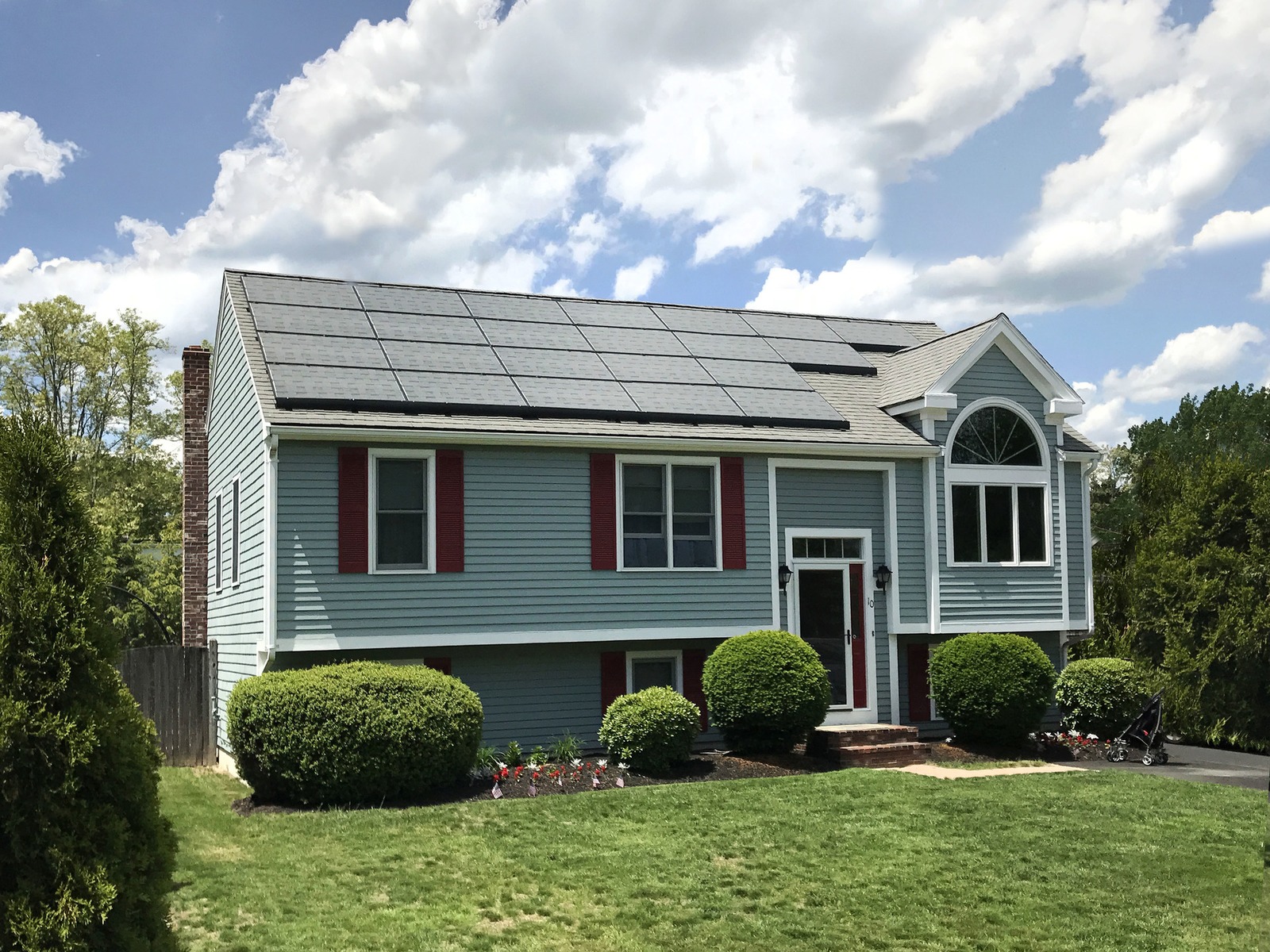
 Figure 1: High-efficiency monocrystalline solar PV installation providing daytime base-load power for a Nigerian commercial facility.
The Hidden Cost of Diesel & Petrol Generator Dependency
To calculate the return on investment of a solar power station, we must first quantify the true cost of generator-supplied electricity. Most facility managers calculate fuel costs alone, omitting maintenance, lubrication, depreciation, and mechanic call-out fees:
Generator Levelized Cost Calculation (30kVA Diesel Generator):
- Average Fuel Consumption: ~6.5 litres of diesel per hour under a 70% electrical load.
- Fuel Price: ₦1,250 per litre.
- Hourly Fuel Cost: $6.5\text{ L} \times ₦1,250 = \mathbf{₦8,125\text{ per hour}}$.
- Monthly Fuel Cost (8 hours daily running time): $₦8,125 \times 8 \times 30 = \mathbf{₦1,950,000\text{ per month}}$.
- Preventative Servicing (Oil, filters, labor every 250 hours): ~₦180,000 monthly.
- Total Monthly Operating Cost: ₦2,130,000.
- Annual Operating Cost: ₦25,560,000.
Over a 3-year period, this single 30kVA generator consumes over ₦76,680,000 in operational capital—leaving behind zero asset equity, high noise pollution, and substantial greenhouse gas emissions.
Solar PV Financial Modeling: A 15kVA Commercial Case Study
Now, let us examine a tailored commercial hybrid solar installation engineered by Global Tech Edge (GTE-PKG-006):
- System Architecture: 15kVA Three-Phase Hybrid Inverter (
GTE-PWR-008), 20.48kWh Lithium $\text{LiFePO}_4$ Storage (GTE-BAT-010), and 13.2kWp Tier-1 Monocrystalline Solar Array (24x 550W panels). - Turnkey Capital Expenditure (CAPEX): ~₦18,500,000 (including panels, lithium storage, inverter, heavy-duty aluminum racking, Type II SPD switchgear, and certified engineering installation).
Daily Energy Yield in Central Nigeria (Abuja / FCT):
- Annual Average Peak Sun Hours (PSH): 5.2 hours.
- Daily Solar Generation: $13.2\text{ kWp} \times 5.2\text{ PSH} \times 0.82\text{ (system efficiency)} \approx \mathbf{56.3\text{ kWh daily}}$.
- Monthly Generation: $\approx 1,689\text{ kWh}$.
Monthly OPEX Displaced:
- Offsetting 7 hours of daytime generator runtime saves: $7\text{ hrs} \times ₦8,125 = ₦56,875\text{ daily} \implies \mathbf{₦1,706,250\text{ monthly fuel savings}}$.
- Offsetting grid consumption during Band A hours saves an additional ₦150,000 monthly.
- Net Monthly Operational Savings: ~₦1,850,000.
Payback Period & Financial Metrics:
$$\text{Simple Payback Period} = \frac{\text{Total CAPEX}}{\text{Annual Savings}} = \frac{₦18,500,000}{₦22,200,000} = \mathbf{0.83\text{ Years (approx. 10 Months!)}}$$
Even under conservative assumptions where the generator was running only 4 hours daily, the payback period extends to just 18 to 22 months.
 Figure 2: Wall-mounted Felicity Solar hybrid inverter with modular 5.12kWh LiFePO4 energy storage deployed by Global Tech Edge.
Comparative Investment Analysis: 10-Year Lifecycle
The table below contrasts the 10-year cumulative expenditure between traditional generator operation and a GTE Hybrid Solar Solution:
| Expenditure Category | Generator Only (Grid Backup) | GTE Hybrid Solar + Lithium System |
|---|---|---|
| Initial Upfront CAPEX | ₦6,500,000 (Generator + ATS) | ₦18,500,000 (Turnkey Solar System) |
| 10-Year Fuel Costs | ₦234,000,000 (at current rates) | ₦0 (Displaced by Solar) |
| Routine Maintenance & Overhauls | ₦21,600,000 | ₦1,200,000 (Panel cleaning & checks) |
| Generator Replacements (Every 4 yrs) | ₦13,000,000 | ₦0 |
| Battery Refresh (Year 10) | N/A | Included in 10-yr warranty cycle |
| Total 10-Year Ownership Cost | ₦275,100,000 | ₦19,700,000 |
| Net 10-Year Capital Retained | Baseline Expense | +₦255,400,000 Saved |
4 Technical Rules to Protect Your Solar ROI
Achieving maximum financial return requires avoiding common corner-cutting practices prevalent in the local Nigerian market:
- Insist on Tier-1 Monocrystalline N-Type TOPCon Panels: Substandard second-hand or grade-B panels degrade by 15% within 18 months under tropical UV exposure. GTE deploys only Tier-1 panels backed by 25-year linear power warranties.
- Transition Exclusively to Lithium $\text{LiFePO}_4$: Lead-acid and tubular gel batteries require replacement every 24 to 36 months in hot climates, destroying your ROI. Lithium delivers 6,000+ cycles at 90% Depth of Discharge (10+ year lifespan).
- Incorporate Engineered DC/AC Protection: A single lightning strike during a rainy season downpour can destroy an unshielded inverter. Type II Surge Protective Devices (SPD) and tested earth pits ($< 5,\Omega$) are mandatory.
- Demand Certified COREN/NEMSA Engineering: Proper cable sizing, MPPT string voltage calculation, and torque-tested busbars ensure minimal $I^2R$ power losses and prevent catastrophic electrical fires.
Conclusion & Partnering with Global Tech Edge
With electricity prices continuing their upward trajectory, solar PV and lithium storage are no longer an optional upgrade—they are an indispensable strategic hedge protecting corporate margins and household budgets.
At Global Tech Edge, we don't sell random boxes of equipment; we engineer customized, high-yield energy assets. From residential villas to corporate manufacturing facilities across Abuja and nationwide, our engineers conduct exhaustive load audits, specify Tier-1 components, and guarantee seamless installation.
Ready to calculate your facility's exact solar ROI? Contact our engineering consultancy team today at 08032141557 or visit our showroom at Block 97 Flat 2, Phase 2 Site 2, Queen Amina Street Kubwa, Abuja.