
id: "GTE-BLG-008" title: "Commercial Energy Audits & Power Factor Correction: Eliminating DisCo Penalties and Diesel Wastage" slug: "post-08-energy-audit-power-factor-correction" category: "Energy Efficiency Consulting" category_slug: "energy-efficiency" profile_area: "Energy Efficiency Consulting & Energy Audits (Page 7)" author: "Engr. Emmanuel Nnamdi, MNSE" date: "2026-04-18" reading_time_minutes: 8 tags: ["Energy Audit", "Power Factor", "APFC", "DisCo Penalties", "Harmonics", "Energy Efficiency"] featured_image: "images/featured.jpg" meta_description: "Learn how commercial energy audits and Automatic Power Factor Correction (APFC) capacitor banks eliminate DisCo utility penalties and reduce generator fuel consumption in Nigeria." related_products: ["GTE-PWR-019", "GTE-PWR-020", "GTE-PWR-024", "GTE-PRO-021"] related_services: ["Energy Efficiency Consulting & Energy Audits", "Power Factor Correction Installation", "Power Quality Analysis"]
Commercial Energy Audits & Power Factor Correction: Eliminating DisCo Penalties and Diesel Wastage
Introduction: The Hidden Waste in Commercial Power Systems
In the ongoing struggle to control overhead expenses in commercial buildings, hotels, hospitals, and educational institutions in Nigeria, energy managers focus intensely on negotiating fuel prices or turning off lights.
Yet, in over 80% of commercial facilities audited by Global Tech Edge, a substantial portion of the facility's electrical expenditure is wasted on an invisible, unbilled culprit: Poor Power Factor and Harmonic Distortion.
Under Nigerian Electricity Regulatory Commission (NERC) regulations, electricity distribution companies (DisCos) meter both active power (kilowatt-hours, kWh) and reactive power (kilovolt-ampere reactive hours, kVARh). If your facility operates with a power factor below 0.85 to 0.90, you are penalized heavily on your monthly utility bill. Worse, that same poor power factor chokes your on-site generators, forcing them to burn significantly more diesel for the exact same mechanical output!
In this technical guide, GTE explains how commercial energy audits and Automatic Power Factor Correction (APFC) eliminate these hidden expenses.
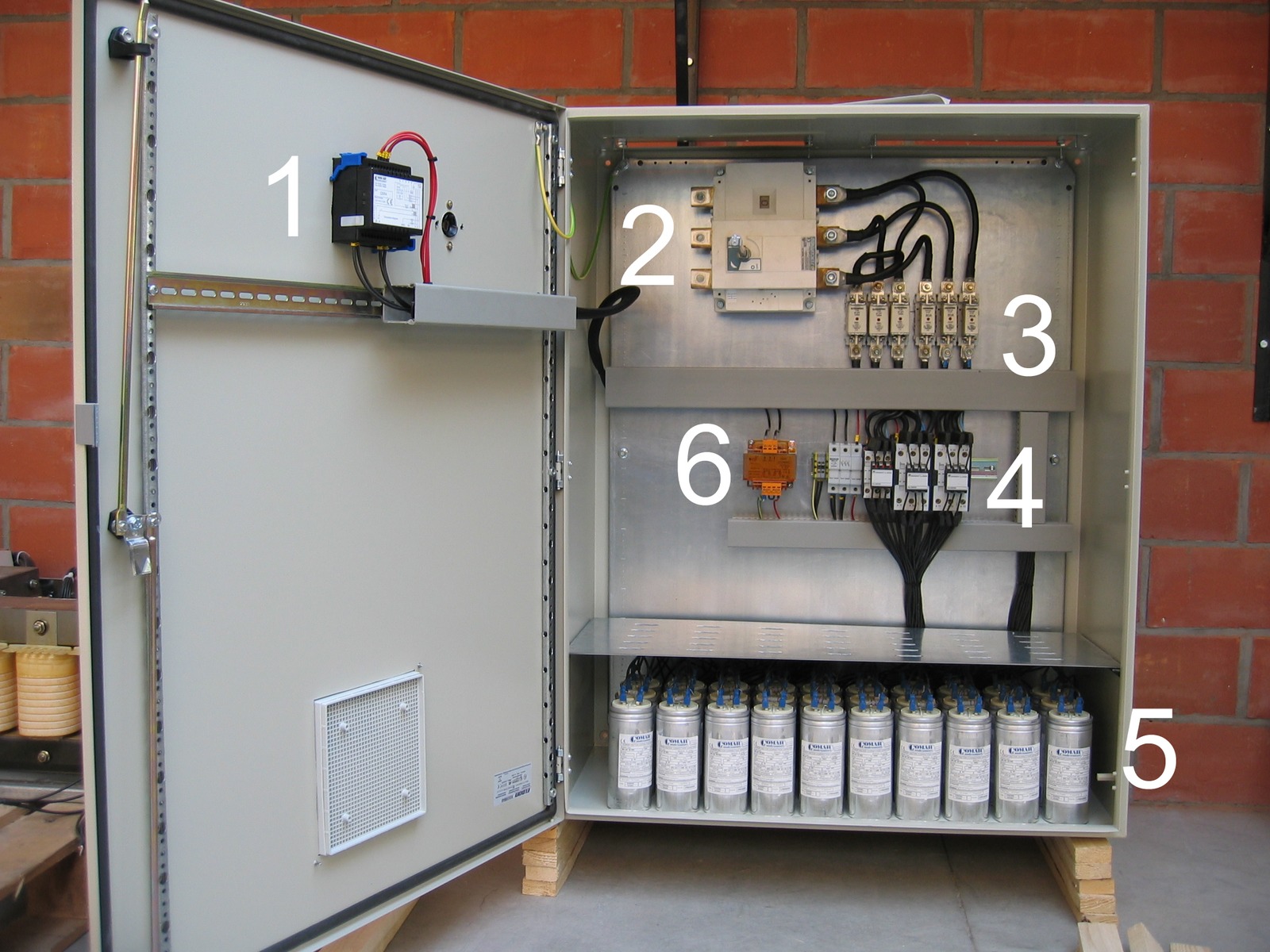
 Figure 1: Industrial Automatic Power Factor Correction (APFC) capacitor bank panel engineered to maintain unity power factor under dynamic loads.
Understanding Power Factor: Active vs. Reactive Power
To understand power factor, consider the classic electrical power triangle:
- Active Power ($P$, measured in Kilowatts, kW): The "real" working power that performs mechanical work—illuminating lights, running computers, turning motor shafts.
- Reactive Power ($Q$, measured in Kilovolt-Amperes Reactive, kVAR): The non-working power required by inductive equipment (motors, compressors, fluorescent ballasts, transformers) to create and sustain their electromagnetic fields.
- Apparent Power ($S$, measured in Kilovolt-Amperes, kVA): The vector sum of real and reactive power that must be supplied by the DisCo grid or generator alternator: $$S = \sqrt{P^2 + Q^2}$$
$$\text{Power Factor (PF)} = \frac{\text{Active Power } (P)}{\text{Apparent Power } (S)} = \cos \phi$$
The Beer Analogy:
Think of a mug of carbonated beer:
- The liquid beer is the Active Power (kW)—the useful product you consume.
- The foam on top is the Reactive Power (kVAR)—necessary to hold the head, but you cannot drink it.
- The total volume of the glass represents the Apparent Power (kVA) you must pay the bartender to pour.
When your power factor is low (e.g., $0.72$), you are paying for a massive glass of foam, forcing your transformers, switchgear, and generator alternators to handle massive circulating currents that deliver zero real work!
The Double Penalty: DisCo Surcharges and Generator Choking
1. DisCo Utility Penalties
When a commercial enterprise draws excessive reactive power from the national grid, the DisCo's transmission cables and distribution transformers heat up needlessly. To deter this, commercial tariffs penalize low power factor by billing based on total kVA demand rather than active kW consumption. Upgrading your power factor from $0.75$ to $0.98$ instantly reduces your metered maximum demand bill by 20% to 25% every month!
2. Generator Efficiency Losses
When powering inductive loads from a diesel generator:
- A generator rated at 100kVA can only produce 80kW of real work at $0.8\text{ PF}$.
- If the facility's power factor drops to $0.65$, that same generator can only safely deliver 65kW before its alternator overheats and triggers an over-current trip, even though the engine has ample horsepower!
- Installing power factor correction restores alternator capacity, allowing the facility to run more equipment without purchasing an expensive larger generator.
 Figure 2: Revenue-grade Class 0.5S multi-function digital power meter providing real-time harmonic analysis and power factor telemetry.
How Automatic Power Factor Correction (APFC) Works
An Automatic Power Factor Correction (APFC) System (GTE-PRO-021) consists of:
- Intelligent Microprocessor PF Controller: Continuously monitors phase voltage and current via split-core Current Transformers (CT).
- Capacitor Steps: A bank of heavy-duty, self-healing, metallized polypropylene power capacitors.
- Detuned Harmonic Reactors: Inductive blocking chokes that prevent resonance and filter out dangerous 5th and 7th harmonic frequencies generated by modern inverter electronics.
- Specialized Capacitor Contactors: Contactors with pre-insertion resistors to safely suppress high-frequency capacitor inrush currents.
When inductive motors start up, the microprocessor instantly switches in the precise microfarad capacity required to supply reactive power locally at the busbar. As a result, the external grid and generator supply only pure real power ($P$), maintaining power factor consistently at 0.95 to 0.99 lag.
The GTE Comprehensive Energy Audit Process
Before specifying an APFC bank or solar array, Global Tech Edge conducts a comprehensive 4-phase energy audit:
- Phase 1 — Power Quality Logging: Connect portable Class A power quality analyzers (
GTE-PWR-019) to the facility's main incomer for 7 consecutive days to capture 24-hour load profiles, voltage sags, power factor curves, and Total Harmonic Distortion (THD). - Phase 2 — Thermal Efficiency Audit: Scan electrical distribution panels, motor casings, and transformers with infrared thermal imaging to identify ohmic losses and overheated conductors.
- Phase 3 — Lighting & HVAC Audit: Assess existing lighting fixtures for LED conversion potential and evaluate AC chiller efficiency.
- Phase 4 — ROI Feasibility Report: Deliver an executive report outlining specific engineering interventions, capital expenditure requirements, and mathematically guaranteed payback periods (typically under 14 months).
Eliminate Power Waste with Global Tech Edge
Stop paying unnecessary DisCo penalties and burning excess diesel. Modern energy efficiency is an engineering science that converts wasted overhead directly into retained corporate profit.
Global Tech Edge designs, builds, and commissions custom APFC capacitor panels and performs certified energy audits across corporate headquarters, factories, shopping malls, and hospitals throughout Nigeria.
Contact our energy efficiency consulting division today at 08032141557 or email globaltechedge@gmail.com.